A typical pre-1980 Canadian house loses roughly 25–40% of its space-heating energy through paths that are neither the windows nor the furnace. Understanding exactly where that energy goes is the first step toward spending retrofit money in the right place.
The Four Primary Heat-Loss Pathways
1. Air Leakage
Uncontrolled air infiltration consistently accounts for 25–35% of heat loss in houses built before modern airtightness requirements. Gaps appear at electrical boxes, plumbing penetrations, attic hatches, rim joists, and wherever different building materials meet. Cold air enters at low points; warm interior air exits at high points — a phenomenon called stack effect that intensifies with every degree the outdoor temperature drops below zero.
Natural Resources Canada estimates that sealing air leaks in a pre-1980 detached house can reduce annual heating costs by 10–20% on its own, without changing the insulation or mechanical system. A blower-door test quantifies leakage in air changes per hour (ACH) at 50 Pascals of pressure differential. Canadian homes tested before retrofit commonly measure 8–12 ACH50; the 2020 National Building Code targets below 2.5 ACH50 for new construction in most climate zones.
2. Thermal Bridging Through Framing
Standard 2×6 stud framing accounts for 15–25% of total wall area, and wood conducts heat several times faster than mineral wool or fibreglass batt. In a well-insulated 2×6 wall with RSI-3.5 (R-20) batts in the cavity, actual whole-wall performance often drops to RSI-2.5 (R-14) when framing members, headers, top plates, and corners are calculated. This gap between nominal cavity insulation and effective whole-wall RSI is called thermal bridging.
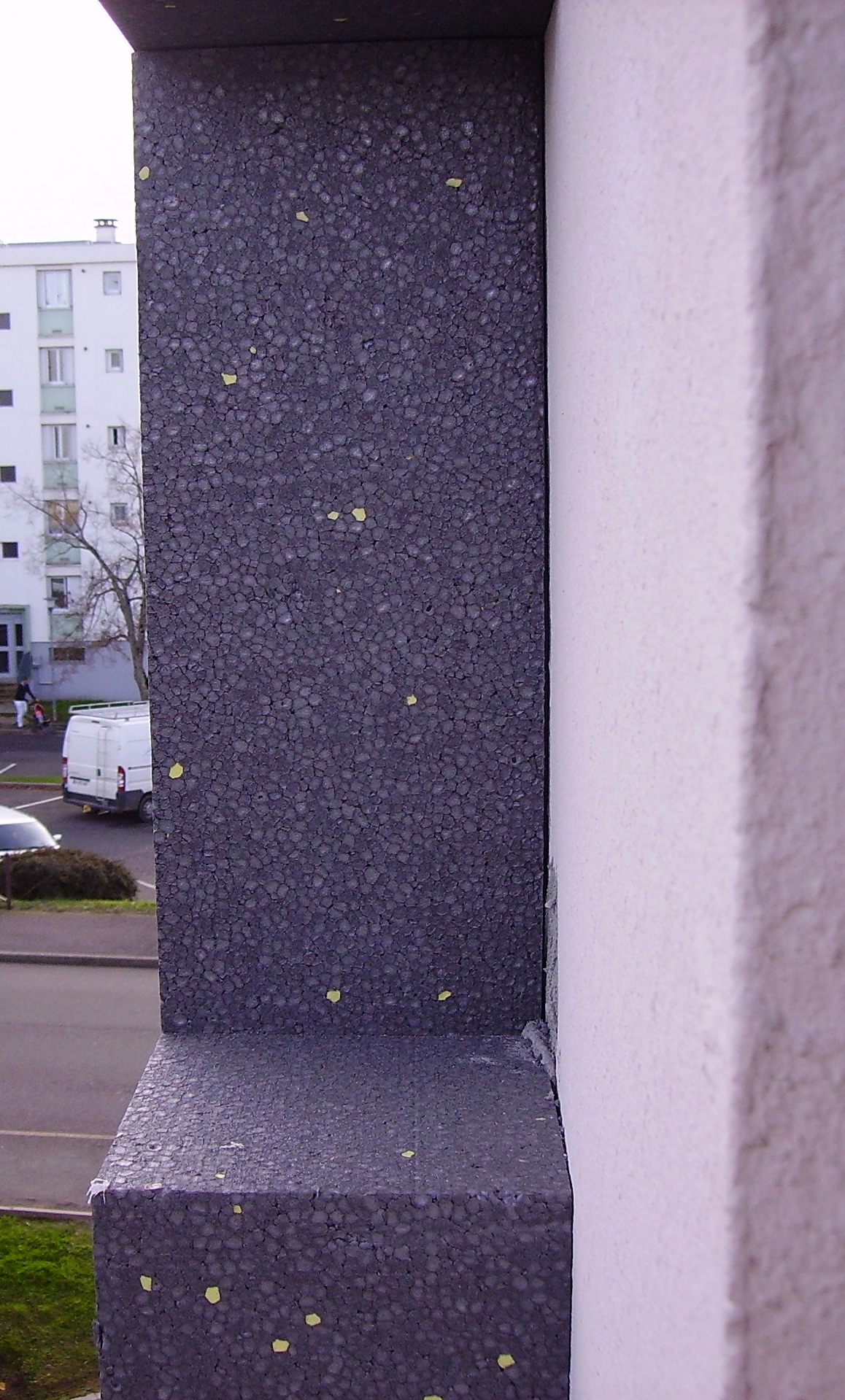
Continuous exterior rigid insulation — typically polyisocyanurate or expanded polystyrene board — breaks the bridge by covering the framing from outside. Adding 50 mm (2 in.) of polyiso exterior insulation to a 2×6 wall improves the effective whole-wall RSI from roughly 2.5 to 4.5, a substantial gain without touching the interior.
3. Attic and Ceiling Heat Loss
Heat rises, and the attic ceiling is often the largest single surface between conditioned and unconditioned space. Pre-1980 attics in Ontario and Quebec were frequently insulated to RSI-3.5 (R-20) or less — a level that would not meet today's OBC requirement of RSI-8.6 (R-49) in climate zones 6 and above. Adding blown cellulose or mineral wool to reach code-current levels typically costs $1,500–$3,500 for a standard bungalow and can cut heating costs by 8–15% on its own.
Cathedral ceilings present additional complications: the rafter depth limits the cavity depth, and any thermal bridging through rafters is unbroken unless continuous insulation is added above the roof deck.
4. Foundation and Basement Heat Loss
Basement walls and the rim joist area account for 15–25% of total envelope heat loss in many Canadian houses. Poured concrete and concrete block have RSI values below 0.2 (R-1) — almost no insulation value. Uninsulated rim joists, where the floor assembly meets the foundation wall, are among the highest-density air-leakage sites in the house.
Interior basement insulation — typically 50–75 mm (2–3 in.) of closed-cell spray foam against the foundation wall, or rigid board covered by a stud wall with batt insulation — brings RSI values to the 3.5–5.3 (R-20 to R-30) range that most provincial codes now require for heated basements.
Windows: Important but Not Dominant
Windows are often blamed for high heating bills, but they typically represent only 10–15% of total envelope heat loss by area, even in houses with single-pane glazing. Replacing single-pane windows with triple-pane low-e argon units (centre-of-glass RSI 0.88 / R-5) improves comfort and reduces condensation, but the energy payback period is long — often 30–50 years — unless the frames were already failing. Air sealing and attic insulation almost always deliver faster financial returns.
Comparing Retrofit Priorities
| Retrofit | Typical Cost (detached bungalow) | Estimated Annual Savings | Approx. Payback |
|---|---|---|---|
| Air sealing (DIY + pro) | $500–$2,000 | 10–20% | 3–8 years |
| Attic insulation top-up | $1,500–$3,500 | 8–15% | 5–12 years |
| Rim joist air sealing + foam | $800–$2,500 | 3–8% | 5–10 years |
| Exterior wall insulation | $8,000–$25,000 | 10–20% | 15–30 years |
| Basement interior insulation | $3,000–$8,000 | 5–12% | 10–20 years |
| Triple-pane window replacement | $700–$1,400 per window | 1–3% per window | 30–50 years |
Estimates based on NRCan retrofit guides and published contractor pricing in Ontario and British Columbia (2024–2026). Actual savings depend on baseline house conditions, climate zone, and fuel type.
The Role of Vapour Control
Any deep insulation retrofit must address vapour diffusion alongside air leakage. In Canadian cold climates (ASHRAE Climate Zones 6–8), the vapour barrier or retarder is placed on the warm-in-winter side of the insulation to prevent moisture-laden interior air from reaching cold surfaces where it would condense. Modern variable-permeance membranes (like Intello or MemBrain) allow the assembly to dry inward during summer without losing cold-side vapour control in winter — a significant improvement over older 6-mil polyethylene that provides zero drying potential.
Where to Start
The most reliable starting point is a certified EnerGuide energy audit. An auditor runs a blower-door test, measures actual air leakage, and uses HOT2000 simulation software to model the house's current performance and the projected impact of specific upgrades. The audit report ranks retrofits by cost-effectiveness and identifies which NRCan or provincial rebates apply. Without this baseline, homeowners frequently spend on visible improvements (new windows) while bypassing the air sealing and attic work that would deliver greater savings.