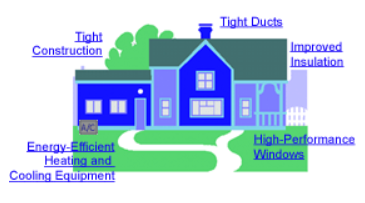
An EnerGuide evaluation is a structured, on-site assessment carried out by a Natural Resources Canada–licensed energy advisor. It produces two deliverables: a numerical EnerGuide rating (expressed in gigajoules of annual energy consumption, or as a score from 0–100 for newer homes) and a prioritized list of recommended upgrades with estimated costs and savings. This article describes what the advisor actually does during the two-to-four-hour visit and how the final report is produced.
Who Qualifies to Conduct an Audit
Only NRCan-registered energy advisors can issue an official EnerGuide label or produce upgrade reports eligible for federal and most provincial rebate programs. Advisors are trained through NRCan's Energy Advisor Certification Program and must complete field audits under supervision before working independently. The Natural Resources Canada website maintains a searchable registry of registered advisors by postal code.
Informal assessments offered by contractors or retail-chain representatives are not the same as a certified EnerGuide evaluation. While they can provide useful information, they do not produce a label and are not accepted for Canada Greener Homes grants or provincial equivalents.
Pre-Audit Preparation
Before the visit, the advisor typically requests 12 months of energy bills to establish a baseline consumption history. The homeowner should ensure access to the attic hatch, mechanical room, crawl space, and electrical panel. The house must be closed up — all exterior doors and windows shut — for the blower-door test. On very cold days, the advisor may adjust the test sequence to avoid prolonged door opening.
The Blower-Door Test
The blower-door test is the most distinctive part of the evaluation. The advisor mounts a calibrated fan in an exterior doorframe and depressurizes the house to 50 Pascals below outdoor air pressure. At that pressure differential, airflow through the fan equals airflow through all of the unintentional gaps in the building envelope. The result is expressed in cubic metres per hour at 50 Pa (m³/h@50Pa) or in air changes per hour at 50 Pa (ACH50).
For a 200 m² (2,150 sq ft) bungalow, a pre-retrofit reading of 10–14 ACH50 is common in houses built before 1980. After air sealing, readings of 3–5 ACH50 are achievable without a whole-house mechanical renovation. The 2020 National Building Code targets 2.5 ACH50 for new construction in most zones; some passive house projects reach below 0.6 ACH50.

Thermal Imaging (Infrared Scanning)
Many advisors conduct an infrared scan of walls, ceilings, and floors during or after the blower-door test. When the house is depressurized, cold outdoor air infiltrates through gaps and creates temperature differentials that the thermal camera captures as colour variations. Common findings include electrical box penetrations, missing insulation above dropped ceilings, unsealed attic bypasses, and rim joist gaps.
Thermal imaging is most effective when the temperature difference between indoors and outdoors is at least 10 °C — easy to achieve on a Canadian winter morning. On mild days, the thermal contrast diminishes and some defects may not appear. Advisors note this limitation in the report and may recommend a follow-up scan in colder weather if results are inconclusive.
Visual Inspection of the Building Envelope
Beyond the instrumented tests, the advisor physically inspects and measures the building envelope:
- Attic: Insulation depth and type, presence of vapour barrier, attic bypasses (areas where air can move from the conditioned space into the attic through gaps around light fixtures, partition walls, or plumbing chases).
- Walls: Exterior cladding type, estimated wall assembly from visible areas, any previous retrofit work.
- Foundation: Insulation presence and type on foundation walls and rim joist, visible cracks or moisture signs.
- Windows and doors: Glazing type (single, double, triple), frame condition, visible air gaps around frames.
Mechanical Systems Review
The advisor documents the heating and cooling systems, including furnace or boiler age, efficiency rating (AFUE), heat pump model and HSPF2 rating if applicable, and the presence and condition of a heat recovery ventilator (HRV) or energy recovery ventilator (ERV). HRV performance is noted — a fouled core or disconnected duct can waste a significant fraction of the HRV's rated efficiency.
Domestic hot water systems are also documented: tank-type versus tankless, fuel type, current efficiency rating, and location (conditioned space versus unconditioned garage).
HOT2000 Energy Modelling
After the site visit, the advisor enters all collected data into NRCan's HOT2000 software, which simulates the house's energy performance using local climate data (based on Canadian Weather Year for Energy Calculation — CWEC files). The model calculates annual energy consumption broken down by end use (space heating, domestic hot water, ventilation, lighting, and appliances at the base level).
The advisor then runs a series of upgrade scenarios — adding attic insulation, air sealing to a lower ACH50 target, replacing the furnace with a cold-climate heat pump — and records the predicted change in EnerGuide score and annual energy cost for each scenario. This produces the prioritized upgrade list included in the final report.
The EnerGuide Label and Upgrade Report
The formal output is an EnerGuide label and a written upgrade report (sometimes called an Advisor Report). The label shows:
- The current EnerGuide rating (GJ/year or 0–100 score)
- The potential rating if all recommended upgrades are completed
- A comparison to average houses of similar size in the same climate zone
The upgrade report ranks recommended measures by cost-effectiveness and identifies which rebates are available through Canada Greener Homes, the Oil to Heat Pump Affordability Program, or provincial equivalents. Most rebate programs require both a pre-upgrade and post-upgrade EnerGuide evaluation — the second visit documents what was actually installed and recalculates the rating.
Rebate Eligibility in Canada (2025–2026)
Federal and provincial rebate programs frequently change. As of early 2026, the primary federal channel is the Canada Greener Homes Loan (interest-free loans up to $40,000), which replaced the Greener Homes Grant that closed to new applicants in 2024. Several provinces — Ontario, BC, Alberta, Nova Scotia — maintain separate rebate streams that can be stacked with federal programs. Eligibility typically requires a registered EnerGuide evaluation for both pre- and post-upgrade assessments.
| Audit Step | Duration | Output |
|---|---|---|
| Blower-door test | 30–60 min | ACH50 / air leakage rate |
| Thermal imaging scan | 30–60 min | Infrared images of thermal anomalies |
| Visual envelope inspection | 45–90 min | Insulation depths, window types, foundation condition |
| Mechanical systems review | 20–40 min | Equipment list with ages and ratings |
| HOT2000 modelling (off-site) | 1–3 hours | Current rating + upgrade scenarios |
| Advisor report preparation | 1–2 hours | EnerGuide label + ranked upgrade list |
What an Audit Does Not Cover
An EnerGuide evaluation is an energy assessment, not a home inspection. It does not assess structural integrity, the condition of the electrical service, or plumbing. It does not identify hazardous materials (asbestos, lead paint) and does not provide a Pass/Fail determination on building code compliance. For homes being purchased or sold, a separate home inspection from a licensed inspector is a distinct and complementary process.